

The Lernaean Hydra — Heracles’ Second Labour
Continuation of the story of The Nemean Lion.
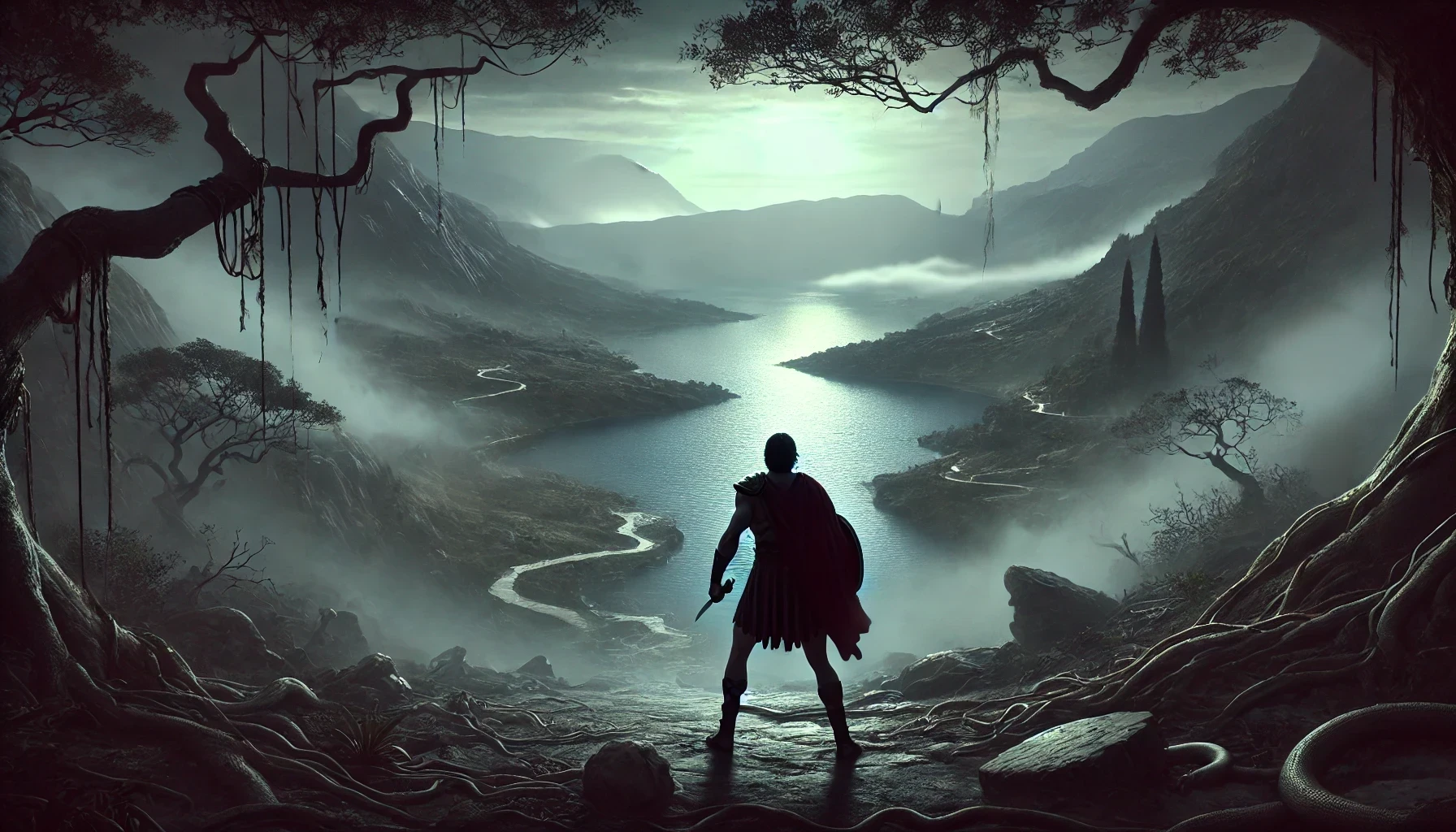
Having made his way back from Nemea to Mycenae, Heracles requested an audience with King Eurystheus to discuss his next assignment.
No one in Mycenae, knowing the mission he had to undertake, expected to see Heracles again. And certainly not in such attire, as if he were a mere bandit. The news quickly spread among the citizens.
“What did you say?!” exclaimed the frightened king. “Do not let him approach me! The orders will be given from the lookout.”
Eurystheus had not expected Heracles to return at all. He knew of his cousin’s virtues, but had not realised their extent. He was beginning to fear him.
“Welcome back, Heracles! I was convinced that an old lion would not be a great test for you,” he said, attempting to downplay the feat. “I have a new job waiting for you!”
“As you wish, Your Majesty,” replied Heracles.
“Do you know Lake Lerna, not far from here? There lies one of the gates to the underworld. The gate is guarded by the terrifying Hydra. It seems that the creature has taken over the entire lake and attacks anyone who approaches it. I wanted to take care of the situation myself, but lately, I have been too busy. I am sending you to deal with it.”
“Then it is time for me to depart!” Heracles added, nodding and bowing to the king. With a small sneer, he turned and left.
As the hero made his way towards Lerna, news of his return reached the ears of Iolaus, Heracles’ nephew. Impressed by the feat and full of admiration for his uncle, the young man decided to sneak out of his home and follow him so that he could witness the next exploit with his own eyes.
Hera’s Trap
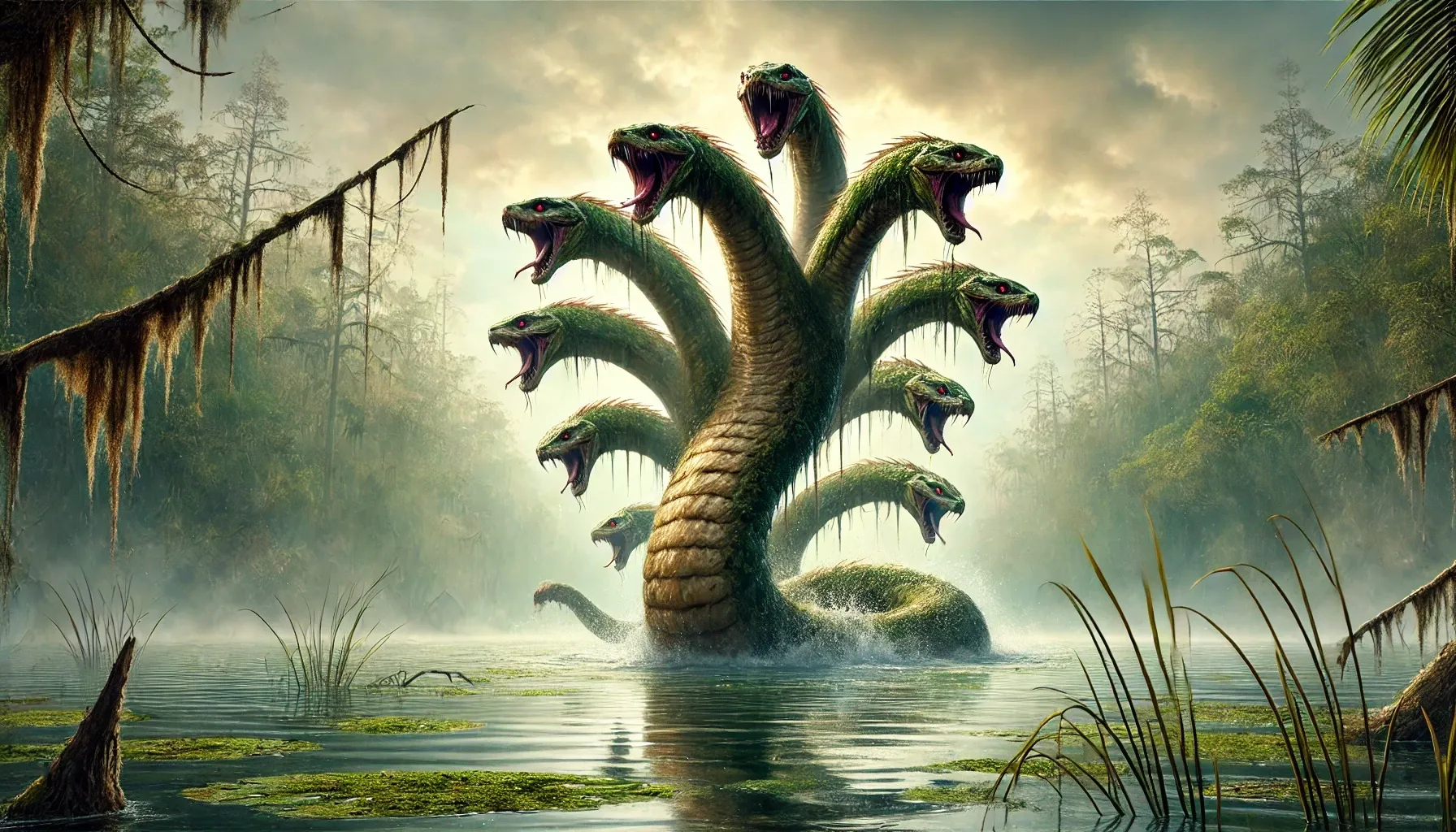
Lake Lerna was no longer one of the tranquil and beautiful corners of the Argolid region. The Hydra, a massive nine-headed water serpent, had made it its lair. It had fouled the waters, which had once been crystal clear but were now murky and filthy. Anyone who approached the lake and lingered too long was attacked by the creature.
The monster was terrifying in both appearance and size. In addition to having nine giant serpent heads, all capable of spitting the most lethal poison in the world, it was said that one of them was immortal. And as if that were not enough, the creature’s greatest ability would soon be discovered.
The goddess Hera, full of rage at Heracles’ victory over the lion, appeared at Lerna to prepare a surprise for his arrival. A surprise laden with malice, as she brought with her a fierce giant crab she decided to hide within the lake’s waters. A deadly trap to ensure that Heracles could not leave that place alive.
The Power of Wounds
Heracles arrived at the lake and made his presence known. He wanted to draw the creature out to be able to observe it and prepare for battle. However, the Hydra rose suddenly from the water before him, spitting venom from all its heads. Heracles’ reflexes and speed allowed him to dodge the attack, positioning himself right beneath one of them. With an elegant, dizzyingly swift movement, he severed the head above him with a single stroke of his sword.
The Hydra withdrew suddenly, pained by the wound, but just at that moment the giant crab emerged from the water to frantically assault Heracles. The hero immediately dodged, but the giant pincers repeatedly snapped at his body, threatening to slice it open and disembowel him. Within seconds, he exchanged his sword for his club and went on the offensive. Dodging the pincers, he stood in front of the crab and struck it with all his might using the club. The blow shattered the shell into thousands of pieces, exposing the body, which remained rigid and stunned. An instant later, it collapsed to the ground and died.
The Hydra, having recovered from the first attack, approached Heracles again. As he dodged fresh jets of venom and deftly swung his sword to sever the heads that came close, he realised that something was amiss. He moved away from the water and saw, to his astonishment, more than twice as many heads as there had been at the start. From each neck severed by the sword, two new heads had grown. It seemed impossible, but the Hydra was getting stronger as it was wounded.
He needed to take refuge and reflect on how to defeat the beast.
A Key Alliance
Heracles found a place to hide, safely beyond the creature’s reach. He was furious, as the task was not only to kill the Hydra but also the giant crab, which he had not been warned about.
“Uncle,” said Iolaus, revealing himself.
“What are you doing here? Where did you come from?”
“I followed you. I wanted to witness your victory against this monster.”
“Do not go near the lake under any circumstances! The Hydra is much stronger than I could have imagined! I don’t know how I can defeat it.”
“I saw everything, Uncle. It’s not fair that they burden you with an extra test! If that’s the case, I should be allowed to help you. Let me be your squire!”
Despite his nephew’s offer of help, Heracles did not know how to win the battle. They began to consider how to attack, but whatever tactics they chose, they could not allow the Hydra to keep growing stronger.
The goddess Athena, appeared once more at this critical moment and brought clarity to their minds. Fire was the weapon they were missing and Iolaus would be essential to securing victory.
A Heroic Tandem
The two warriors emerged from the hideout. Heracles wielded the sword, while Iolaus held a lit torch in his hand. They had worked out how to co-ordinate their movements and approached the lake to attack again.
Every time one of the heads approached to attack, Heracles stepped forwards to sever its neck. Iolaus then came up behind him with the torch to burn the wound. Cauterising the wound prevented two new heads from growing in its place.
The two heroes continued to advance using this method, dealing with one head after another. Finally, only one head remained, the central one, which was said to be immortal.
After the final chop and burn, the monster’s body collapsed into the water. But the last head, which had fallen on the shore of the lake, continued to thrash and lash out uncontrollably.
As a final remedy, Heracles decided to dig a very deep hole in the ground. There he buried the head that could not die. Thus, it could no longer do any harm. The battle had been long and exhausting for both, but in the end, they had achieved victory.
The Fatality of Lerna
Before leaving the lake, Heracles approached the dead heads of the creature. This time, he paid no tribute to his opponent, as the Hydra was not technically dead. He did, however, dip his arrowheads into the blood of the severed heads. The highly poisonous blood turned those arrows into lethal darts.
Once they had departed, Hera appeared again by the lake. Furious because the trap had not worked, she seized the crab’s corpse in a rage and threw it with all her strength towards the sky. Today, that crab shines among the stars in the form of a constellation.
Finally, although Lake Lerna had been freed from the beast, the dead body remained there in a state of putrefaction. Its poisonous vapours turned into sulphuric gas and gradually caused the waters to evaporate. Today, only an infected dried-up swamp remains.
Heracles’ second labour had been completed.
Continues with The Ceryneian Hind.
Continue exploring
Reading list
- Labours of Heracles. Wikipedia, the Free Encyclopedia.
- Fry, S. (2018). Heroes. Penguin Books.
- Hamiltor, E. (1942). Mythology, Timeless tales of Gods and Heroes. Little, Brown and Company.
- Graves, R. (1955). The Greek Myths. Penguin Books.